チーム「Link∞UP」は日本と北米の‘愉快で有益な’「マウンテンライフ」情報を日本と英語圏において共有をすること。 その生活を‘一生懸命楽しんでいる人達’のコネクション強化を図ることを目的に活動しています。 日本や北米でのマウンテンライフについて情報の欲しい方や私達に興味のある方はお気軽にご連絡下さい。

ラベル English の投稿を表示しています。 すべての投稿を表示

2019年4月18日木曜日

Back number Vol.165 Skiing in the harsh and gracious Japanese mountains

Looking at Mt.Shirouma from Tsugaike Shizen(Nature) Ko-en (Park)


This story was written by Kazuki Kaneiwa
   
                                                                                                              Translated by Yumiko Mori

As a backcountry skier,I always find myself feeling somehow relieved at the beginning of spring. While relishing this bizarre but comfortable feeling, I know this is an announcement for the end of the season.


Unless being asked,I wouldn't go for Mt.Tateyama in spring nor Mt. Fuji in early summer. Usually I would prepare  to work on the plateaued climbing skills and trying to lose some weights that gained during the ski season.


Personally I would say there is only a month out the a year that you can expect constant powder snow. Generally it's from mid January to mid February and this is based on a past few years of  my experience. Before that time we wouldn't have enough snow and after that the quality of the snow declines and there would be infrequent precipitation.


Otari... Oh... you ARE so amazing!!!


There are usually enough amount of snow at the lower mountains around Otari in the beginning of February. This option serves as a PlanB when we expect typical winter atmospheric pressure in Japanese Alps area. 
However, when weather permits, we head out to the Ridges of the North Japanese Alps, it significantly increase the risks and makes us feel anxious but in the end, you would be totally pleased with what your choice. 

After spending two seasons of ski bum life in Shirouma area. This fourth season is like spending times staring at weather forecast and atmospheric pressure charts on weekdays and trying to seize the best possible condition on weekends. Japanese Northern Alps and especially Shirouma is by far the my favourite area and mountain but from my home which is in the west of Tokyo, it takes 3 hours and half to get there. Furthermore, if you try to go Otari and Itoigawa, you need to add another 30 min to an hour.  Sadly, Shirouma is no longer the easy access for me.


Happou Ridge in this January


The amount of snow, weather, distance, various risks and costs are the factors that I have to take into consideration when I pick objectives. Sometime I have to scale the pros and cons and justify the objectives. 
After spending winter simply frightened by the objectives or being preoccupied in the success of the recent trips or disappointed with mistakes definitely takes toll on me. So at the end, I would be more mentally tired and ready to announce the end of the season.


Then it rains, even at the higher points in the mountains. Once the hard ice layers are formed after the rain, it will change the laying patterns completely even it is followed by another snow fall. This only makes the laying structure more unstable. Although this is in theory, sometime we've experienced the conditions not being changed after the rain. We never know truly until we actually go there.
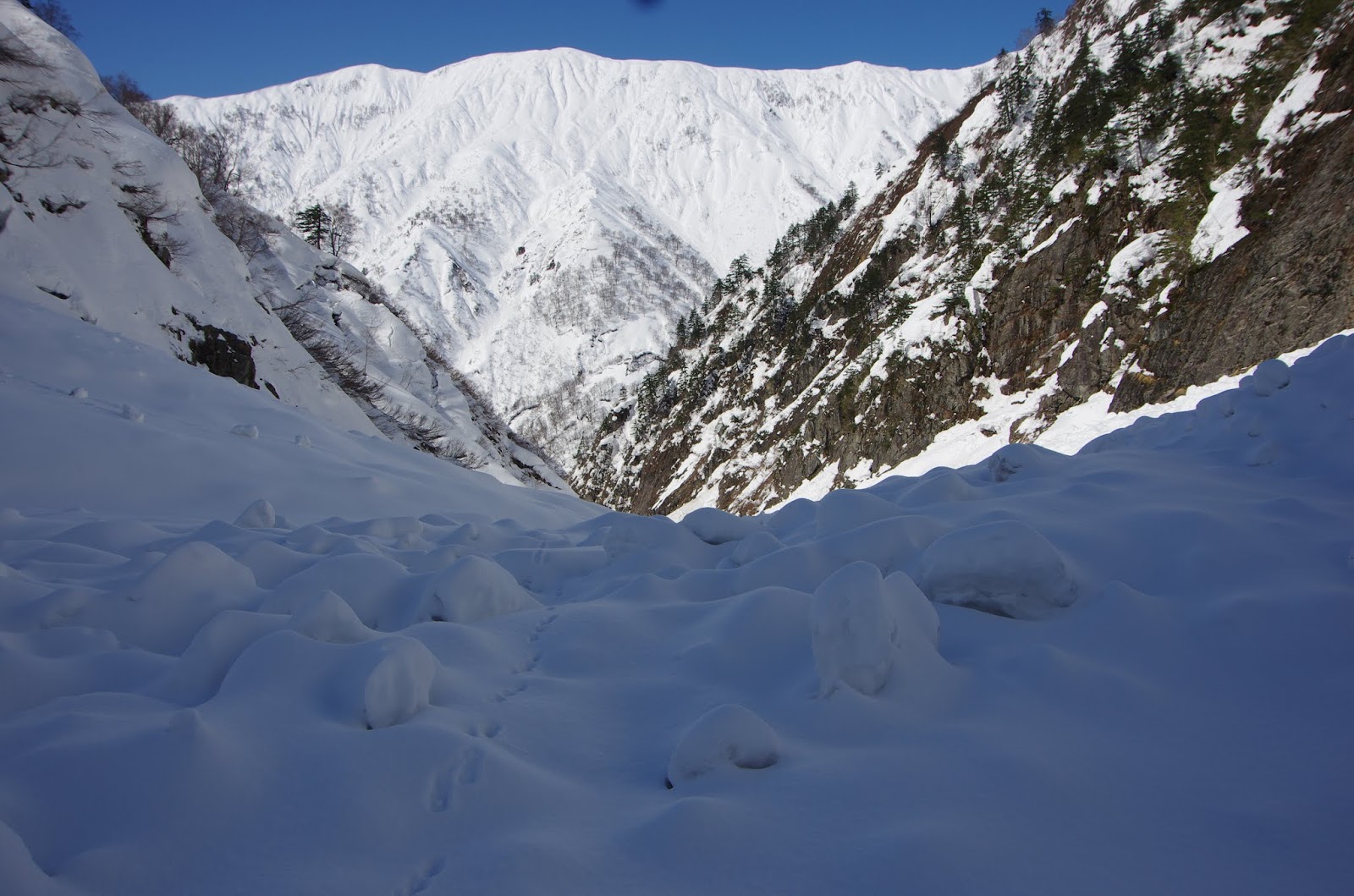


Debris at the Higura valley in Mt. Nakano

However once it rains up in the higher parts, always a huge avalanche would follow. This lead to a piles of debris in the valley. Sometimes it can cover entire valley and discourage you from skiing for the season.

Often we can achieve our objectives for the season in early spring thanks to the steady snow conditions and weather. The sense of satisfaction often prevents us from heading to backcountry skiing, feeling like "well I have already accomplished my objectives and had enough for the season. Better not to take any more risks"   


Kaerazu 2nd Ridge- up to now this is still one of the most terrifying mountains 

Mountains are intimidating.Especially the ones that have become the unsteady chunk of snow just being piled up in random layers. No matter how much you study about avalanches, gaining physical strength or skills, as long as you are in the area you won't be able to completely avoid the risk of being caught in avalanches.  If you keep on going to the same line all the time and together with extensive research, you may be able to reduce the risk significantly but what's the point of doing that...Taking the certain amount of risks and trying to manage with your skills and experiences are what makes backcountry skiing exciting.


Sometime the scary thoughts come up in my head as I prepare for the trip "Am I preparing for the death right now?" Of course this isn't the reason I go to the mountains at all. If that is the purpose, there are so many ways to accomplish it.What I am doing is preparing for the mountains so that I can come back.Some might still say that if you want to remain alive and that the objective for your thorough preparation why don't you choose "not to go at all" Well this still goes to a certain extreme point of view.  Nevertheless by choosing to continue backcountry skiing, I have nothing to say to some people consider us preparing for the early demise at least from their point of view.


The point is how you can lay out the uncertain factors and address the issues with efforts and ideas. If it's something that is above your capacity level at that time, you need to modify and find another feasible objectives. 
True alpinists are the ones while having high objectives, knowing the timing and efforts to progress to the next level. I doubt if I would ever get to that point but still I have to do my work.


My favourite tourist attraction-Daio Wasabi Farm in Azumino

Enough of the detrimental thoughts and finally I am going to summarize my points here. The momentary relief that always comes at this time of the year ties to the satisfaction from my accomplishments and self acceptance.  
However, the problem is that it is already that time of the year now but I haven't being embraced by this feelings yet. So my solution is "continue to go to the mountains" The mountains in the spring can show any faces. Although daytime gets longer and weather becomes more stable, it still does have an extreme side. For me I feel that the nature don't care about us humans at all, if they judge you are not strong enough to survive they will just sift us without hesitation.

As a powerless human, what we can do is try to remain humble and keep going back the the harsh yet gracious nature with all possible preparation. 


2019年3月22日金曜日

Back number Vol.164 Accident Report [Human Factor and Mind set]

Approach to The Maul
  This story was written by Toshiyuki Yamada 
                                                                                                  Translated by Yumiko Mori

 I still clearly remember what happened exactly at the moment. While avoiding rocks falling on me at the belaying point of the first pitch, I was ready to catch my partner that could happen any moment.   Soon after, I felt a strong pull on the rope together with my partner's scream. At the same time, I realized that there were a set of face-sized rocks falling fiercely toward me. Having already taken secure at the spot, there was no room for me to dodge so only option left for me was trying to brace my body as small as I can, hid my neck and head and pray. In a split second, a rock hit my head and I was blacked out... Luckily I recovered just after a few seconds but then another rock hit my right shin...I heard my partner shouting to see if I am okay. But the impact that I had on my shin was too strong to answer right away. The only good thing was even though I had been hit twice I still managed to hold onto the rope and remain belaying. Thanks to the adrenaline kicking in(?), the pain on my leg started to disappear and I was able to move the leg.  Knowing that I didn't fracture my leg was a big relieve for me at that time. Then I asked my partner to climb up to the anchor that caught him and take a secure.
While communicating how the situation that each of us was in, I told him that although my helmet got a huge crack,it still has served its purpose. No noticeable injury was found on my head, after touching my leg over the pants, it felt like there was some sort of cut but judging from the pain, I concluded that it should be just a minor scar without giving it a further thought.

"I can only get to go alpine climbing once a week with my current schedule" "It took four hours of approach to the line today" "Guilty for not completing the objective,going back home and giving up just after first pitch" were the few human factors and thoughts that run through my head. And to make the things worse, story of Steve House continued to climb after losing one of his shoes and Doug Scott surviving from Orga while having fractured his leg during his expedition in Pakistan somehow came up in my mind. "If I always choose to bail just because of such a small setback, I will never get to where I want to be. And this is the time I can really practice pushing my boundary, just try and see how far I can go"  This was how I decided to continued to climb...
After reaching where my partner was, we discussed our conditions (mainly our physical conditions) from very subjective point of views and agreed on continuing to climb. I remembered that Boswell's record explained that the second pitch wasn't a crux but it's got the worst protection of all pitches. After passing the halfway of the pitch, I noticed that the rock condition drastically changed, I felt almost all of the holds that I had to use seemed to be floating. From my experience, I can tolerate the risk of taking runout to a certain degree, but losing the hold that I need to use was above my skill set. This situation was exactly what Rocky's topo describes as "Catastrophe loose rock" Just a few meters before the anchor of the second pitch, the chockstone- key hold, moved and looked like it can drop anytime. At the moment, my fear of dropping this chockstone and potentially hitting my partner distracted me and I was not able to mantle. "Okay that's it for the day" I told myself and decided to climb down to the last protection which was 5 meters below. As I lowered myself, I accidentally stepped on the loose rock and it was as if I was receiving punishment of all my poor judgement for the day, I fell from the shoulder and hit hardly against the wall.

As a result, I ended up having 5 stitches on my shin, horrible bruised and frozen shoulder and (possibly fractured) ribs and whiplash on my neck.  Luckily my partner didn't have any injury from this accident.
Because of that I had to take 2 weeks off from my work. And with the plenty of spare time I had, I decided to reflect on this accident.


Thank you Millet you ARE my live saver!


The importance of the human factor and mindset

Most of the incident report tells the details of the accidents and they say that they could or should have done in this way and why they took such actions in that situation and so on. For me this is all about "What if..." therefore I am doubtful that this would serve as a tool to enhance the risk management skills. Not necessary everyone takes the same climbing style and individual's tolerance level toward the risks also vary.


I would say "human factor"-Human's behavioural pattern, in my case, it was poor decision making process, that was the culprit of causing this accident. If you have been climbing many years, you might be able to relate to this. This fall could also be attributed to the unnecessary motivation that I had. But often the case, the internal emotion and thoughts could be the main culprit but not openly shared and because of that not so many people discuss them as much as other technical or conditional aspects of the situation when we investigate the case. Most likely people would simply conclude that "he pushed too much" or "He didn't have enough skills to accomplish that line" I feel there is no room for me to argue about that kind of opinions. However that wouldn't benefit anyone, so I would like you to bear with me while going further details in this article.


You need to have an appropriate mindset to address human factors. If you are an independent climber,  researching about the route and preparing for it must be essential parts. This also means that you are expecting uncertainties=risks beforehand and preparing for them. Although this often ended up just being a theory on paper and not so useful at the actual site.
Regardless of the mental preparation, most of the behaviours and decision made in the mountains are likely to be twisted due to the relationship with your partner, your mental state, environmental condition such as weather and time. However this doesn't mean that the risk that you came up with during the preparation phase disappear. It is just the reality is far from the risk that you expected in terms of size or type. The most important thing is properly realizing and acknowledge the differences  of the anticipated risks and the what's actually happening at the moment.

We decide to go to a certain objective because the risks you anticipate would be within your skills, knowledge and experience. Or even though it's above your current level but might want to push your limit (In this case, you really need to be careful) and believe that's still manageable. This time I have already recognized the possible looseness of the rocks from the record by Greg Boswell during the preparation phase. But by actually going there I learned that its condition was way worse than I expected. It was represented by the cause of the initial fall of my partner. The rock that came off was the size of a human and as it dropped it broken into face-sized pieces. Also it was along the gully and to make the things worse, there was a sharp hike in the temperature on that day. Looking back, now I would say this was a suicidal thing and my understanding of the word "Loose Rock" got another definition.

When there is a significant gap between the estimated risk and reality at site, that means that your risk management wasn't functioning properly. For example, when the weather forecast says that there would be snow but the amount of the snowfall was more than you expected or having seen an avalanche when there was low avalanche risk.  In those cases, we need to reassess risks objectively. I believe the inherent risk of solo climbing stems from here as well. Your judgement tend to be quite subjective and you only get half of the information. By discussing and sharing opinions with partner, we can make decisions based on objective and unbiased perspectives.


Risk is always present in the mountains 

This time we skipped important process of mindset and continued to climb. This lead us to another accident which put us in a further dangerous situation. Risk is inevitable as long as you are in the mountains and climbing also avoiding the unexpected accidents is quite hard. If you are a serious climber, there will be some occasions that you have to take a big risk. (Don't worry! This is when you go on a private one, when I am working as a Guide I wouldn't-Always safety first) Yet I am certain that as long as you catch the signals from the mountains, pause, discuss and mindset, a lots of accidents could be prevented.


I heard more accidents than previous years in the Rockies during this winter. This whole experience also made me to think about the balance of being bold and careful.
 Almost two months have passed since the accident and my body is finally fully recovered now. In April, I am planning to do a short expedition with Takeshi -Our member in the Rockies and hopefully I can share some exciting stories with you after that.


Mountains can be cruel and beautiful 

Lastly I am going to share some of the lessons that we learned from this accident.


Investigation of the incident and reflection

1.Recognition of the route condition
Like I said earlier, I knew that route can be very loose from Greg's record. It's been quite warm like Spring until February, especially the temperature was above 0 at night on the day of the accident. I could have taken the temperature into consideration but it was a rock line so didn't give it much thoughts. But obviously I should have paid attention to an idea of the ice and snow around the route could have contract the rock and warm temperature could expand the rock. Especially having contracted rock on the gully stabilize the condition and consequently lower the risk.


2.Belaying point for the first pitch

At that time I thought that my belaying point wan't a problem since I positioned myself slightly off the line that my partner was climbing and there was a overhanging rock right above me. However I should have taken a few points into consideration that as the lead climber goes up, the range of the falling rock could significantly changes and especially within a formation such as gully, the rock could hit against the wall and change falling directions completely. In this case, I should have positioned myself at the lower place.


3.Lack of communication
We should have evaluated each other's situation and made judgement objectively. Neither of me and my partner were much communicative type and we are kind of people who tend to go with flow. The important thing is that we should know each other's personality well and address the problems.
I learned that face sized rocks that hit me was initially the size of the human on our way back to the car. It was very fortunate that the rock broke into pieces as it was heading toward me and just thinking about what if it didn't break and human size rock hit me was extremely horrifying. If I heard that story before I went on the second pitch I wouldn't have continued.

4. About Gear
After the first accident, our rope was damaged and the inner part was exposed. We should check gears thoroughly not only our body after the accident. If we had a long descending with a rope like that, it could have lead to another horrible accident. Also if you climb the alpine route especially along the gully even there is a spacious ledge, in order to prevent the damage from the falling rock or ice, we should have coiled neatly and keep them close to you.

5.About Injury
When an accident occurred, make sure to check the condition of your possible injuries with your eyes. Bruises and fractures often influence the movement right away but other injury such as lacerations you don't feel the pain even though it's quite deep and severe. When the rock hit my shin, I only touched over my clothes if I had seen the actual wound I wouldn't have continued. Actually I was stunned when I first saw the condition when I got back to my car...

Thank you for reading the long story an hope you all would enjoy the safe spring climbing.

2019年2月20日水曜日

Back number Vol.160 Recap of the 2019 Ski Tours in Japan

This story was written by Yuji Akiyama
                                                                                  Translated by Yumiko Mori

Although as most of you already have known that I am working as a Guide based out of the Canadian Rockies, recent increasing popularity of "Japow" -Japanese powder snow-has been kept me busy in carrying out a couple of Japan tours. Usually it starts from the middle of January.This post is for some of you who are interested in the behind the scenes of those tours.


●Tour A
Period: Jan 21st to 28th (8 Days)
Location :  4nights in Hakuba and three 3 nights at Nakanoyu at Kamikouchi
Guests : 8(4 Canadians and 4 Americans) All skiers
Course:   Wakakuri Ridge, Mt.Hiyodori from Tsugaike Kougen,Kamijyou,Mt. Oonagi, south and north face of Mt Abou,Mt. Yake to Kamikouchi via Nakahorizawa

Conclusions :
To my surprise, Hakuba had significantly less amount of snow in this year and this had made me worried up until the begging of the tour. Fortunately two days before our trip started they got 40cm of fresh snow to start and then 60cm,30cm and 20 cm respectively for the following days.  Also all the participants for this tour are all experienced skiers so we didn't have any problems due to the skill discrepancies.


●Tour B
Period :  Jan 29th to Feb 5th (8Days)
Locations : 4 nights in Hakuba and 3 nights Nakanoyu at Kamikouchi
Guests : 8(3 British, 2 Swiss, 3 Belgian)

Course:North of Cortina, Traverse from Tsugaike Kougen to Norikura Ski Resort via Mt.Hiyodori,  Happou Ridge, Mt. Oonagi, North face of Mt. Abou and Sightseeing at Hida-Takayama(Due to the down pouring rain at the mountains)

Conclusions : Since we just successfully completed previous tour that was blessed with heaps of powder snow, our team went on the second tour with a great deal of confidence. However we were welcomed by a much warmer weather at Hakuba this time and realized that this had changed the quality of the snow into more damp one. It was like creamy textured power rather than the light and deep powder that I expected like the initial tour.  I know this might be inevitable situation especially in Japan. We experience tons of snow all the time during the winter, the quality of those fresh snow wouldn't remain for such a long time. Luckily the frequent snow often pile up on those old ones and refreshes but within a nice and warm day the quality of the snow changes drastically.

Piled up snow on the sides of the street 
Introducing members of the tour A
Sneak peek of a Japanese Inn's room
Shirouma Inn at Shirouma

An hour of Becon lesson on the first day of the tour 
Powderrrrr!!!!!
Leaving Hakuba for Kamikouchi 
Used two cars, one if for guests and the other is for the luggage 
Lunch at a Soba noodle restaurant
Japanese full course meals everyday 
Beautiful tranquility in Japanese forests 
After dropping guests at Matsumoto, two Guides enjoyed themselves as a tourist
Tour B's meeting
At Mt. Oonagi
Fantastic weather on the day of Wakaguri Traverse
Japanese beech tree soothes you after long days of skiing
We chose this place as a Guide meeting's location 

If you see yourself as an adventurous person, try this Natto- Fermented soy beans

They all bought Japanese Mountaineering Quality Brand "Montbell" Jackets

Went for sightseeing on the last day of the tour (Hida-Takayama)
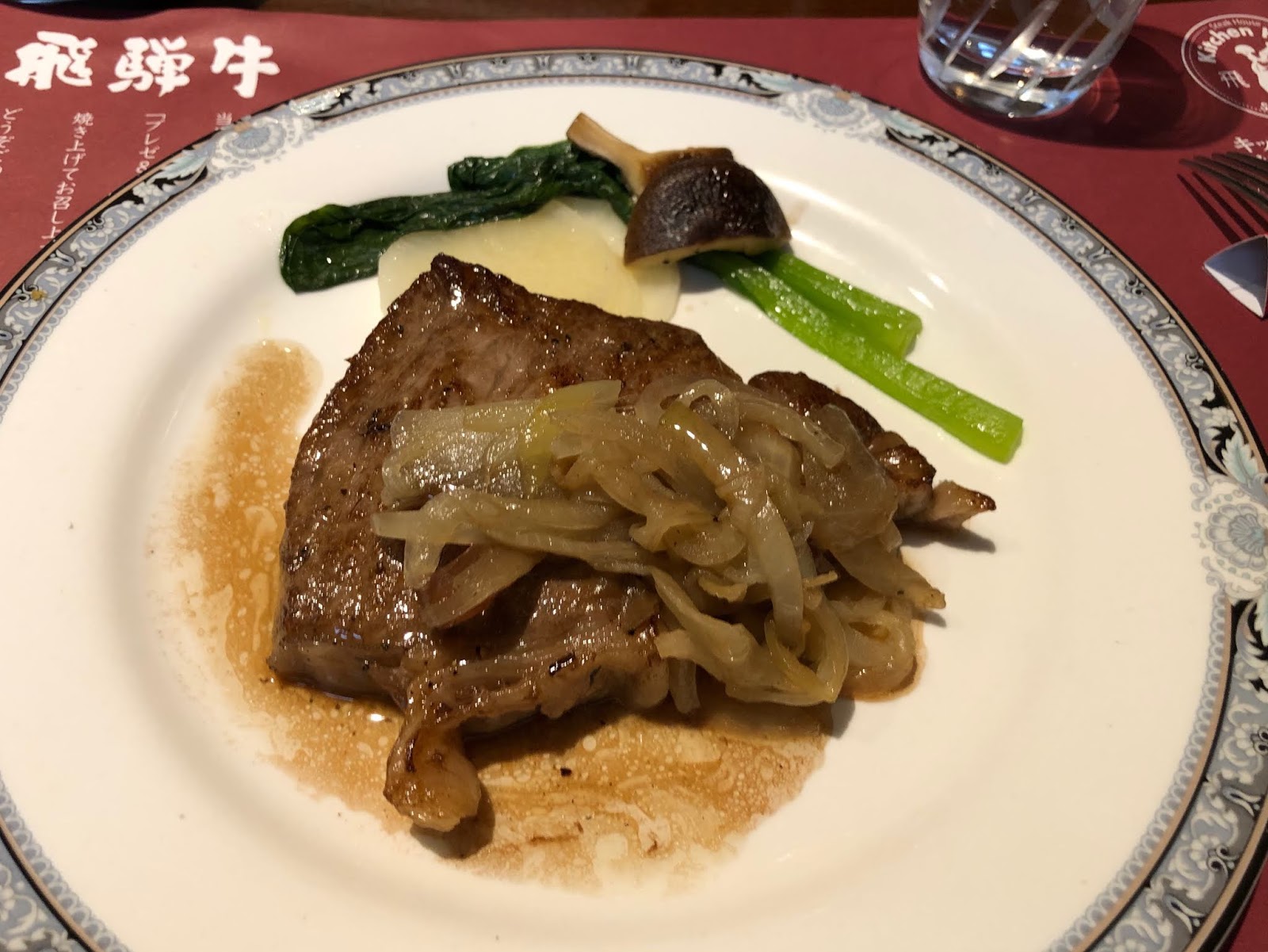
$70 Hidagyu Lunch set
Experimenting on various sakes night after night...

Trying Japanese traditional Inn's house coat 

2018年11月1日木曜日

Backnumber Vol.137 Hidaka Mountain Range - Hokkaido Ridge walk through Mt.Poroshiri to Mt. Fushimi

This story was written by Chiharu Hoshino

                                                                                                               Translated by Yumiko Mori

Despite its nothernmost location, Hokkaido experienced a sweltering summer this year. This year might be the worst as you can literally feel the heat even at the peaks of the mountains.
Adding to this crazy weather, we also had first snow fall at Mt. Kuro (Daisetsuzann) late in August which was surprisingly early for the year.


This time we embarked on our adventure that connects Mt.Poroshiri−Highest mountain in the Hidaka Mountain Range and Mt. Fushimi by the ridge.  Although there are multiple routes that lead to the peak of the Mt. Poroshiri, we chose the one starting from Birotori town side. (Furenai course) Since you will walk through the gorge, wading shoes are needed. Yet personally this trail is by far my favorite one. The trail takes you to the woods, gorge, flower beds and ridge that allows you to see breathtaking cirque view below. In a hot and uncomfortable summer, walking through gorge is the only possible escape from the heat. However it's also known as notorious route when it rains, rapid increase of the water volume makes it impossible for people to go through the route.


Walking against the stream like this.  Depending on the amount of the water it varies, but it was little above knee at the deepest spot for this time.

Poroshiri hut that locates at the end of the gorge. They don't serve meals but there is always a custodian staying in the hut. Reservations are required for an overnight stay at the hut.


 After pushing your way through the steep hill you will get to the ridge where you can see the beautiful cirque below including Poroshiri North Cirque and Seven Marshes Cirque.  You might spot a bear if you are lucky.

Mt. Totta Bestu  Photo above

The ridge connects from Mt.Totta Bestu, Mt. North Totta Bestu and Mt.1967.  Along the ridge, there are sections that's narrow,  sections that you have to push through dense shrubs and bushes and sections for scrambling. Overall my review for the trail overseeing the Hidaka Mountain Range are phenomenal. Furthermore there aren't so many people on the trail. We were the only ones at the peak of  Mt. North Totta Betsu.


After passing though the Mt.Pipairo, Mt.Fushimi awaits. In spite of the fact that this is the only stepped hiking trail in Hidaka Mountain Range, there aren't many spots you can obtain water. To make matters worse, depending on the season it can be very hard to get water once you are on the trail. Some sections on the ridge require you to go down along the gorge to get water. So I highly recommend you to do some research to know the spots that you can get water before your trip.


Thank you for reading!!

2018年10月8日月曜日

Back Number Vol. 142 Family friendly traveling spots for an outdoor man/women

This story was written by Kazuki Kaneiwa      Translated by Yumiko Mori

Time really flies and my turn to contribute an article just came. To be honest, I would love to write about the climbing endeavours but sadly I injured my fingers lately. As a result I was forced to take a break from climbing this past month. While waiting for a recovery, I decided to take my family for a vacation. 


Signiture unique formation of rocks at Hotokegaura  


My main goal for this trip is visit my parent's place-Otaru city, Hokkaido where used to thrive as an entrance harbour city. However it's been experienceing declining population and higher rate of aging. As many rural cities have in common, some youth chose to stay and some chose not. I was definitely the latter. Maybe I was afraid of being part of decay and became oblivious. Also I have been always wanting to see the world and held the belief that there should be somewhere (perfect place for me) in the world... 
Sunset at Tsugarukaikyo

Aside from that sentimental feelings I added another purpose as a family trip. So we decided to make a round trip between Otaru and Rishiri. Initially my plan was flying into the Shin-Chitose airport but it was costly and we couldn't get to take our car with us. So we ended up choosing the ferry that runs between Ooma (Shimo-kita-han-tou) and Hakodate.
On my way back I chose another ferry route between Otaru and Niigata. It would roughly still take 2000km drive so I managed to get 10 days off my work.


Koiwai Farm Horse Train

"As we rush through our trip it will lose its essential part" I couldn't agree more.  In this way I supoese the best trip can be only achieved by using our feet... Then maybe "walking across Japan" Or "completing the best 100 mountains in Japan without using transportation" would be the best way to travel. When it comes to having the best memory while travelling"Slower is better" So instead of viewing transportation as a mean seeing it as part of purpose. The trip would be unforgetable experience. 


With this equation for the fun travel in mind,I'd always get confused to be asked how my flight was because by choosing flying I am choosing the fastest method over other joy that travel brought with... To be polite I would just say only one appropriate answer...Yes It was good...

Nebuta's house  Wa・Rasse 

Aside from how the method and speed affect your experience of your trip, My goals of this trip are making family memory and successfully meeting everyone's requests.

Balancing family life and my mountain careeer are always my biggest focus.


"Hayabusa" in the process of combing 


Hachiman Marsh

Since I have never been Iwate and Aomori, I have reserached a couple of popular mountains in the region. Hachimandaira is one of the easy hike route and little elevation gain so I managed to take my child with me for a quick afternoon hike. I was able to use a stroller all the way and it was about an hour so definitely a good place to visit for a family with a small kid.


Massive forrest at Hachimandaira

Even during the short walk the beauty of the wetland was outstanding. I remembered someone wrote that this kind of terrain is ideal for skiing. Personally I feel this might be boring as the hill doesn't seem to be steep enough to make exciting routes. However depending on how you picture the scene it might show you another face. For example, if you come here before they plow snow, this land became massive primitive looking land so it will have its unique character.


Curious kid at a hotel 

Aomori Ken by Michi Nara


Wetland at Mt.Hakkouda

Mt. Hakkouda seemed to be a little long route to go with a baby. So I decided to make a quick solo hike. Starting from Sangayu making a loop around the mountain for about 2 hours. Early morning wetland was surprisingly pleasant and beautiful. I wrote down this place in my mind re-visit section. Although as much as I wanted to try Mt. Iwate and Mt. Iwaki, I decided to visit them during the winter time for another fun to ski down.


Gorgeous sunny day at Osoreyama 

After the refreshing morning hike and going back to the town it was still in the morning. 

On my whim I checked out the Harimine at Hotokegaura with a hope of it might be still climbable condition. Ended up realizing the condition was far from climbable and it was just very loose and fragile. 

Appear to be climbable?? Uniuqe rock formation at Hotokegaura

To sum up my trip I indulged myself with an amazing rice bowl topped with tuna and sea urchin at a restaurant near my hotel. Overall my first visit to Shimokita Hantou ended up as a successful trip. Next time I would like to throw some rock climbing at Nuidouishiyama as part of itenerary.  


Tuna and seaurchin 

Thank you for reading!!