Translated by Yumiko Mori
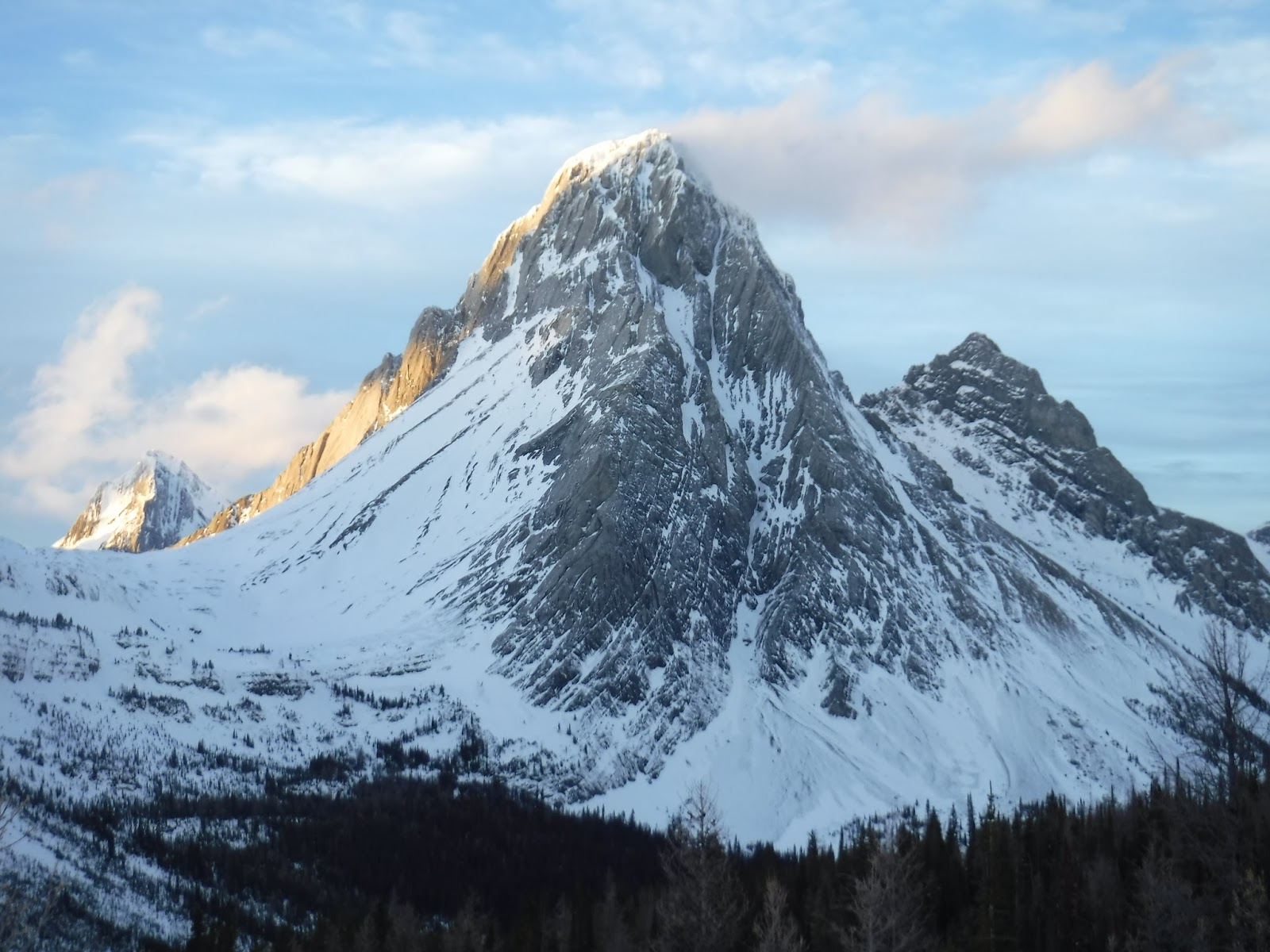
Finally with some snow fall in the town of the Rockies just a few days ago, it announced the arrival of the good winter season that many of us are anxiously waiting for.Already amidst of the full on winter in the mountains, our member Bob and I tried a mix line called Dark Nutue at Lake Louise - Photo above
Climbing is rapidly gaining popularity in Japan- maybe worldwide as it became a sport that will be competed during the Tokyo 2020 Olympics.
Although various opinions are heard, I definitely believe that having climbing gyms close by gives us great opportunity to boost the craze.
I can't help but feel the sense of envy for people who decided to start climbing at this time. When I started climbing back in Japan many many years ago, the only options were to join Alpine club in the university, community based hard core club or taught by a guide.
I would say last 10 years have shown that rock climbing field opened its door to the public more.
However the opportunities of learning alpine climbing aren't increasing yet or else declining in many countries.
The reasons can be very easy and simple. "Too many uncertain factors that alpine climbing has"
In other words, there are always dangers that you can't control and the high possibility of getting involved in the accident and lead to serious injuries or life threatening experience.
With that being said, popularity of Big Wall free climbing at Yosemite among the top climbers gives the best example in this case.While pushing your limit, you can remove as much uncertainties like avalanches, falling rocks and weather as possible. And even if you got hurt rescue is practically reachable. So there are no doubts that this field has a promise of gaining popularity.
In short, alpine climbing is an activity that you have to accept and manage all of this uncertainty.
Especially when attempting a first ascent, information like snow condition, weather and the affect of the geographical feature that you can get in preparation phase are extremely scarce. Also even minor accident during the attempt like breaking bones can lead to fatal accident.
Scary formula...Breaking bones ⇨Unable to walk⇨frostbite ⇨ hypothermia⇨death
What alpine climbers do is accepting the all possible scenarios and besides finding the best possible line at the edge of your limit.
That's why the sense of accomplishment can't be described in any easy words and makes us to pursue another new line afterwards.
Nobody wants to lose your life.
Maybe too direct but it's definitely the truth. So if you set your mind and trying to pursue your passion for alpine climbing you will face a huge setback in finding a partner. Furthermore, there are extremely limited opportunity that you can meet someone that you can follow their steps or find any institution that offer a course of pure alpine climbing not to be an Alpine Guide.
Although alpine climbing does contain various factors and you can't entirely rely on your experiences, there is still no doubt that going mountains with experienced alpine climbers provides you with the best lessons.
As I am an Alpine Guide and not an Alpine Climber if you are striving to be an Alpine Climber and took course from a Guide like me, it might not result in meaningful experience. Rather, I would say finding someone who is an Alpine Climber and striving to make effort all the time and trying lines with them would be the best way to enhance your alpine climbing knowledge and skills.
When I was in Japan "Winter Climbers Meeting" was something that is an example of what I just said.This got its idea from UK's "Climbers Meet" and now this meeting took place every year either summer or winter alternatively.
Leading Alpine Climbers from around the world gather and interact with the local climbers.And some find their partners or next project. Sometime this opportunity lead to an amazing results in places like Himalayas.This can be said absolutely great system for aspiring Alpine Climbers.
However in order to participate in this meeting, you need to be at a certain level and it's like representing country in the alpine climbing to attend these meetings.
For people who would like to know how to reach the level, I am going to cover some of other countries approaches in terms of helping new Alpine Climbers improve their skills and abilities.
US/ Alpine Mentors
Term: 2 Years
Fee: Free
Age: It said up until 30 before but I don't see any now
Launched: 2012
Details can be seen via the link above. It's led by a known Alpine Climber and Mountain Guide Steve House.
This year, they are divided into two groups. Surprisingly they hired many Patagonia Ambassadors as an instructor and the field is worldwide. Also this programs yield many first ascents.
Slovenia /Slovenian young alpinists group *Website not found
Term: 3Years
Fee: Unknown
Age Restriction: Unknown
Launched: 2012
10 young participants are picked from Alpine Association of Slovenia then they chose the objective by themselves. There will be a full support in terms of training, equipment and skills. This tells the strong passion for the Alpinism in Central Europe.
New Zealand/New Zealand Alpine Team
Term: 3Years
Fee: Unknown but I assume it's free
Age: Between 18-27
Launched: 2012
It's small group consisting of 3−4 people and they climb and ski everywhere in the world such as Yosemite, Canadian Rockies, Peru, Patagonia and Himalayas to name a few. In the application process there are some trials and looks like trad climbing skills and overall stamina occupy the major part of the criteria to pass the screening. Please refer to the link above for the further details.
Personally I met one of the teams in the Rockies while doing ice climbing but they are exceptional...
While chatting with them, they told me that the alpine climbing community in New Zealand is also disappearing and they are desperately trying to find solutions to combat the issue and facilitate the growth of new promising alpine climbers.
Austria /Naturfeunde Alpinekader Website not found
Term: 3Years
Fee: Unknown
Age: Unknown
Launched 2012
First year started off with sport climbing and then winter mountaineering. From the second year, they began sending members for expeditions. Peru expedition in 2014 is also recorded as their achievement.
All the programs introduced above are launched within last 5-8 years. Sense of crisis for the declining alpine climbing field from each country can be found from this trend.
Other than that, there are Germany, France and Spain but they all took similar system.
France started in 1991, Spain in 1997and Germany in 2000. Most of them are run by its national Alpine Club of each country such as Alpine club of Germany and the programs are generally 2-3 years long. The total of 12 young members consisting of 6 males and females.
Although there are programs run by Alpine Club of Canada called "Leadership Program", to participate, you have to pay the fee and only a couple of one week long courses are currently run throughout a year.
However, there are plenty of scholarship opportunities for mountaineering and avalanche education so there are still some good aspects as well. I would dig deeper specifically about this topic some other time.
Those programs can't necessary cover the whole topics but most programs spent 2-3 years and this means they are gradually getting new young Alpinists ready for their own adventures.Above all, most of them are free and specialize in youth to support the next generation of Alpine Climbers.
Despite the common belief of in order to be stronger and good at it, you need to practice as much as you can and push your limit but in alpine climbing, things doesn't go in that way.
We can all learn from mistakes and like popular saying goes "practice makes perfect" but in alpine climbing even a small mistake can take away your life or serious consequences. So making mistakes often takes away from you doing a second shot.
Especially young people tend to push themselves than they are suppose to be and they do have that vitality to do so. That's why the relationship built through the mentoring system between young aspiring alpine climbers and experienced climbers benefit them significantly.
Just a little bit of off topic, when doing rock climbing, as long as you have solid understandings and skills, pushing your limit can be achieved practically in a easy and safe manner. Also there are plenty of learning opportunities the community like I said at the beginning. The chance of getting hit by avalanche and falling rocks are significantly lower and even if you break bones the likelihood of dying due to the hypothermia is very slim.

Photo above: Crack climbing at Zion
When pushing your limit in the alpine ski field, almost same degrees of danger as alpine climbing accompanies. Even minor mistakes cause avalanche and you can easily lose your life. However, in terms of learning opportunity, ski industry itself has a huge community and popularity. And with the larger amount of the opportunity to be sponsored by companies together with the population of competitive skiers being significantly larger make the industry strong.

Furthermore, in comparison, alpine climbers are always exposed to the dangerous situation whole day or even a couple of days in row but skiers are exposed to the danger less than an hour...
Nonetheless I believe alpine climbing is the very base of mountaineering and in order to reach the peak, you are required to do everything you can, accept and manage all the possible risks and dangers and overcome everything.
I am not expecting sudden blossom of alpine field, but hoping that if we can create a community in which new generation of aspiring climbers can learn and be ready for their alpine climbing.
After researching other countries' programs, I have realized again that it's truly hard to raise new generations of alpine climbers and at the same time I found myself looking for ways to support those programs in my community. To make my dream come true, I need to pursue my own alpine climbing not only my guiding skills to be an Alpine mentor.
Thank you for reading!